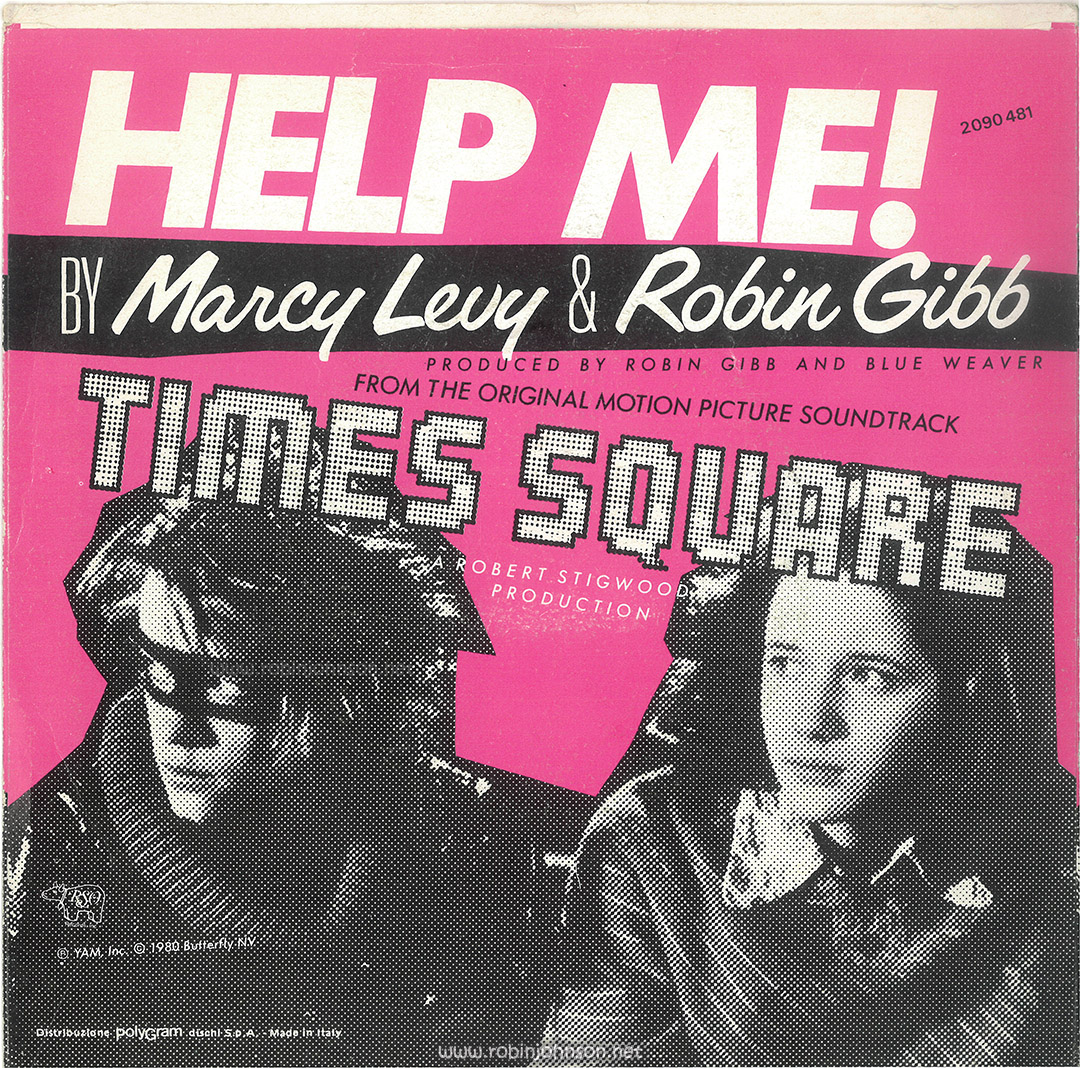
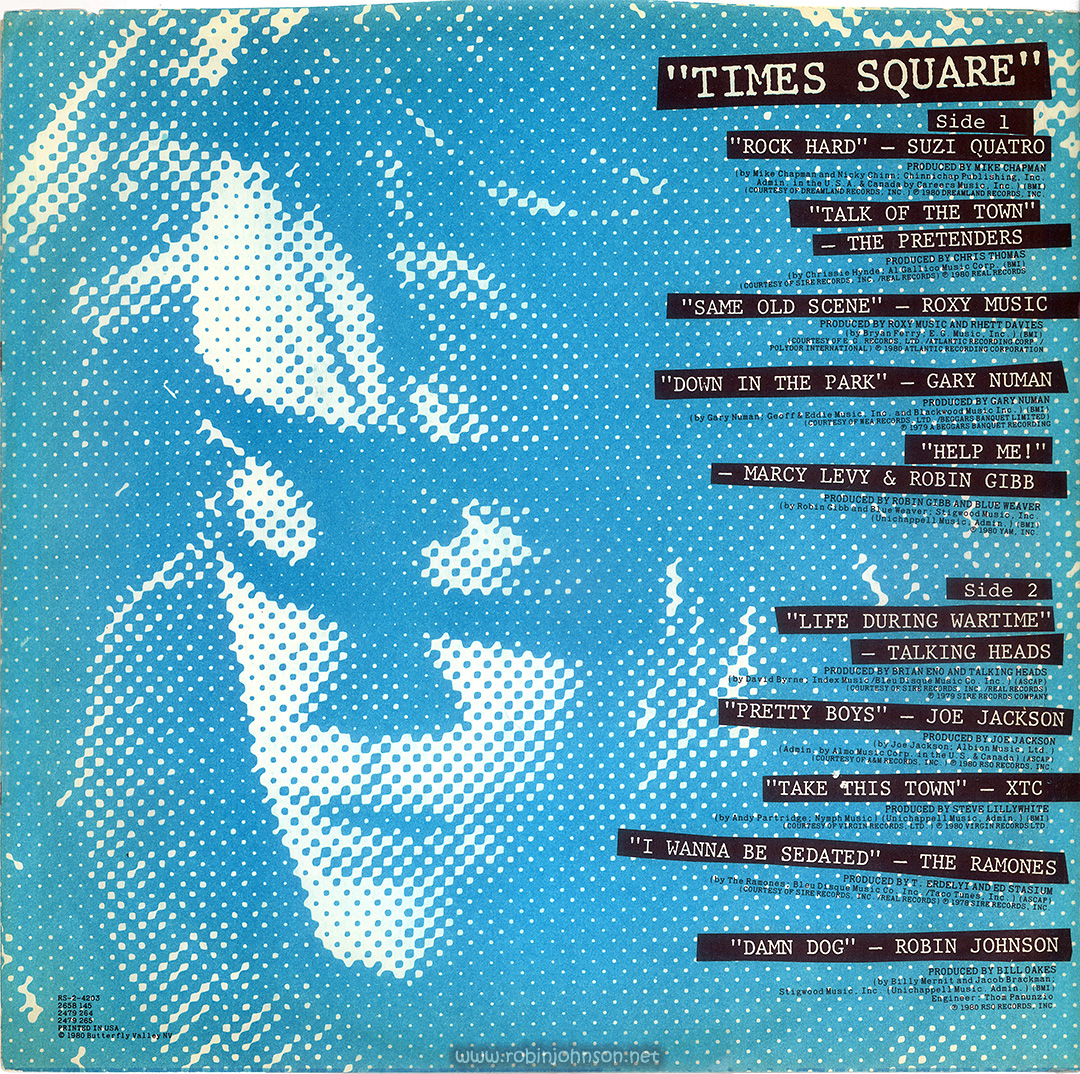
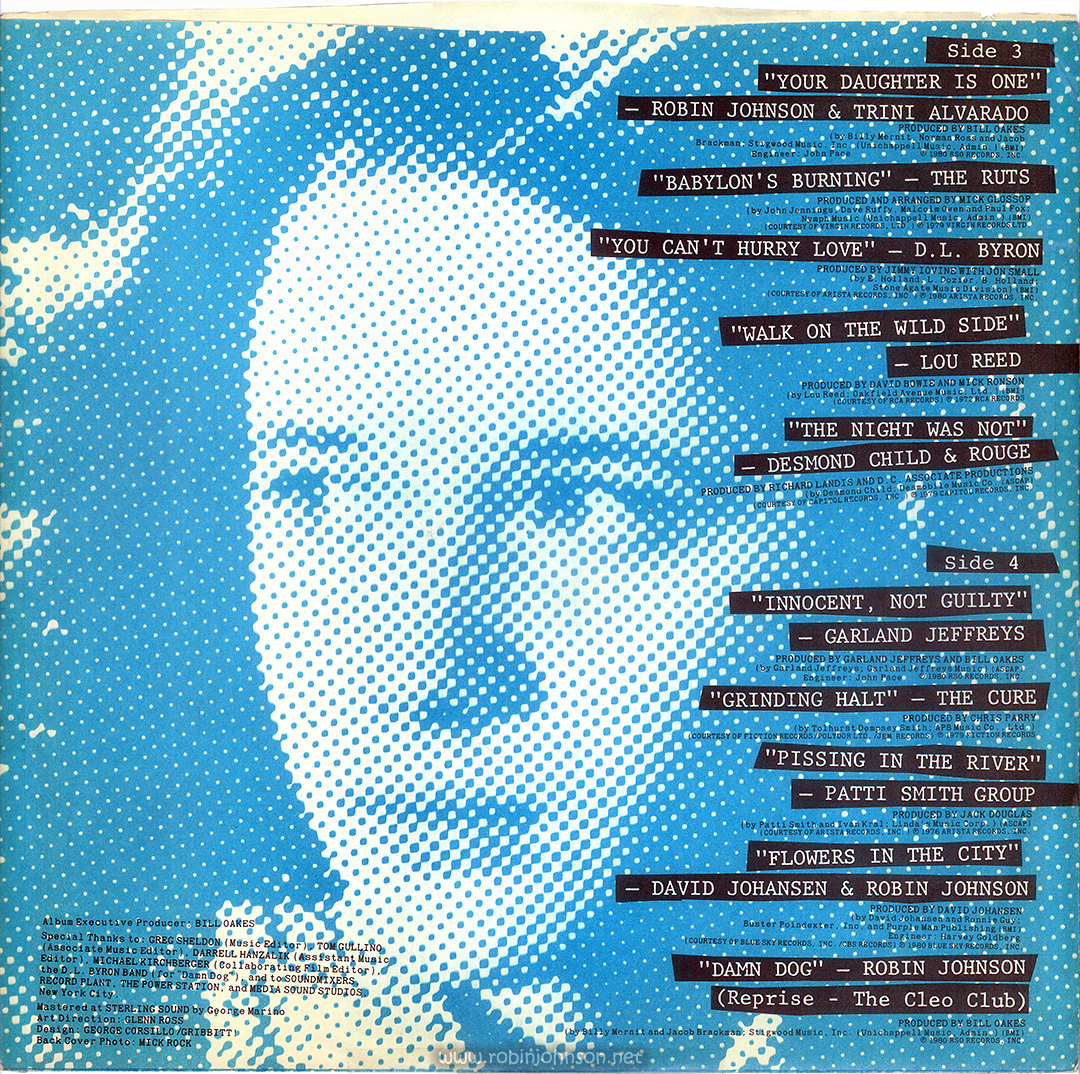
As before, I have no clue as to the text, but the image on page 14 of the Japanese souvenir program for Times Square is another frame from the movie. The photo of Pammy and Nicky on page 15 is the promotional shot which was used for the cover of the Italian “Help Me!” single, and as the illustrations on the soundtrack album’s paper sleeves. The color shot of Johnny and Pammy on page 15, accompanied for some reason by a button featuring black and white hands cradling a dove, looks like a frame from the film, but isn’t. It will turn up later as a lobby card in Germany. For some reason, it’s reversed.
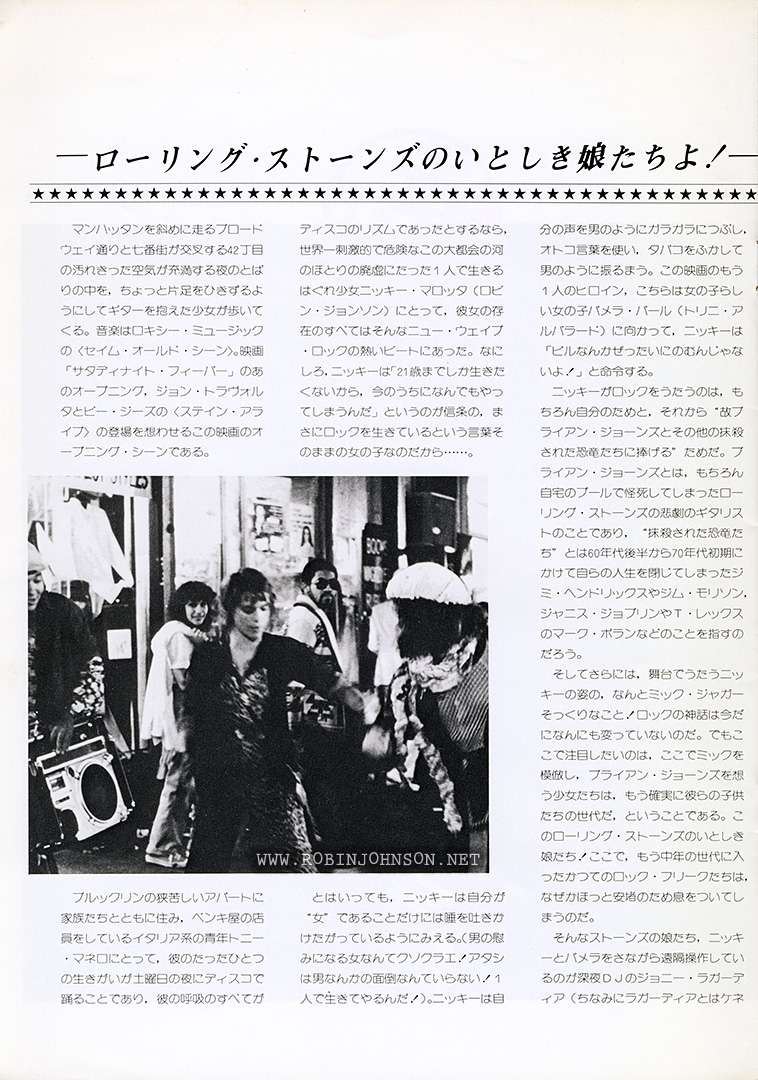


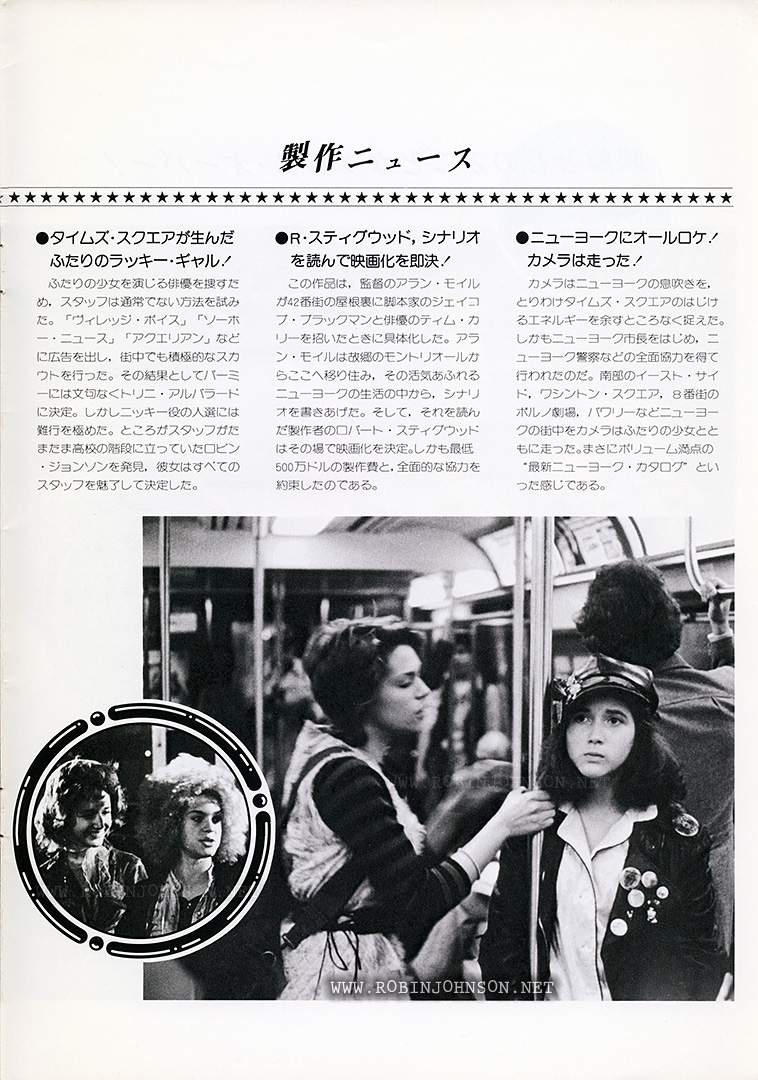


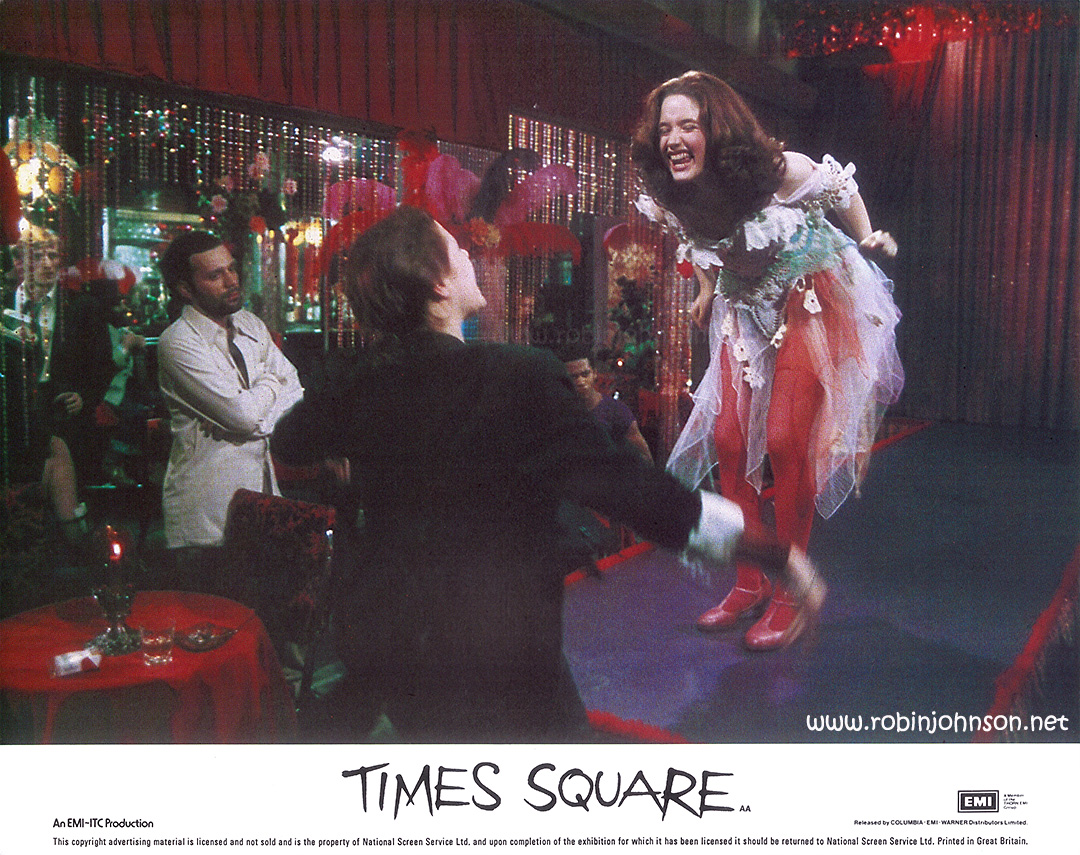
Both photos on page 17 are frames from the film. The photo of the Sleez Girls on page 18, featuring coulda-been-Nicky Zoe Lund, is a frame from the film, but the shot of Nicky just below is a promotional photo that previously appeared in Joepie No. 365. And Pammy and Nicky dancing at each other in the Cleo Club on page 19 is a shot that had been used as a UK lobby card. Whether they were really “honoring America” is a question only they, and perhaps the Japanese, could answer.
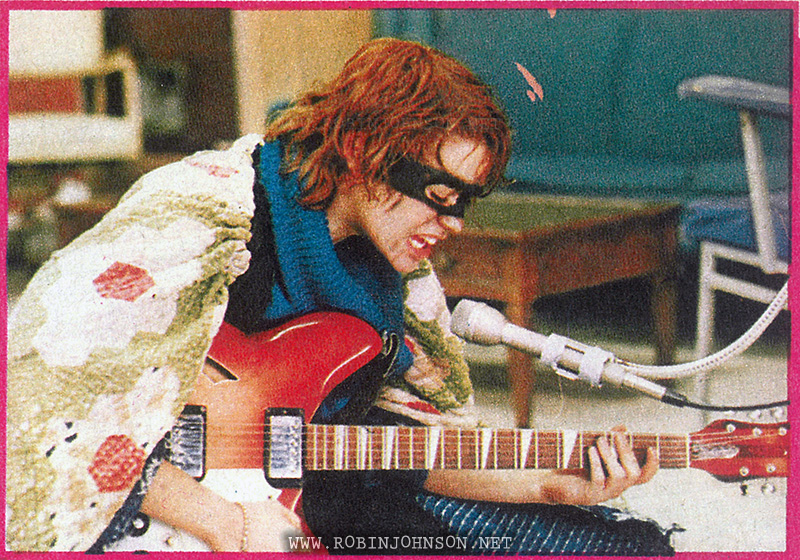
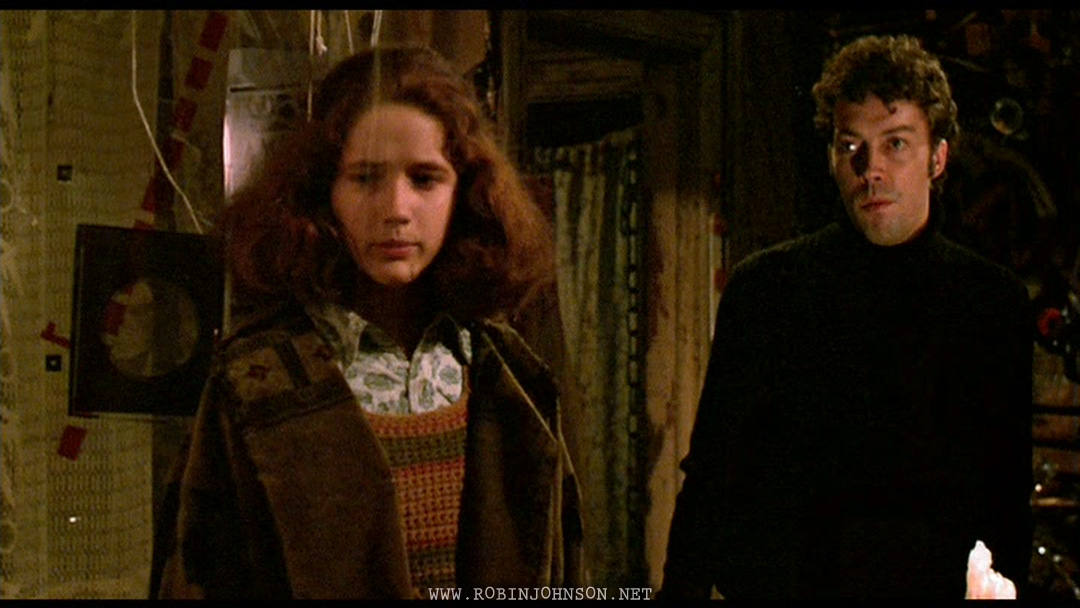
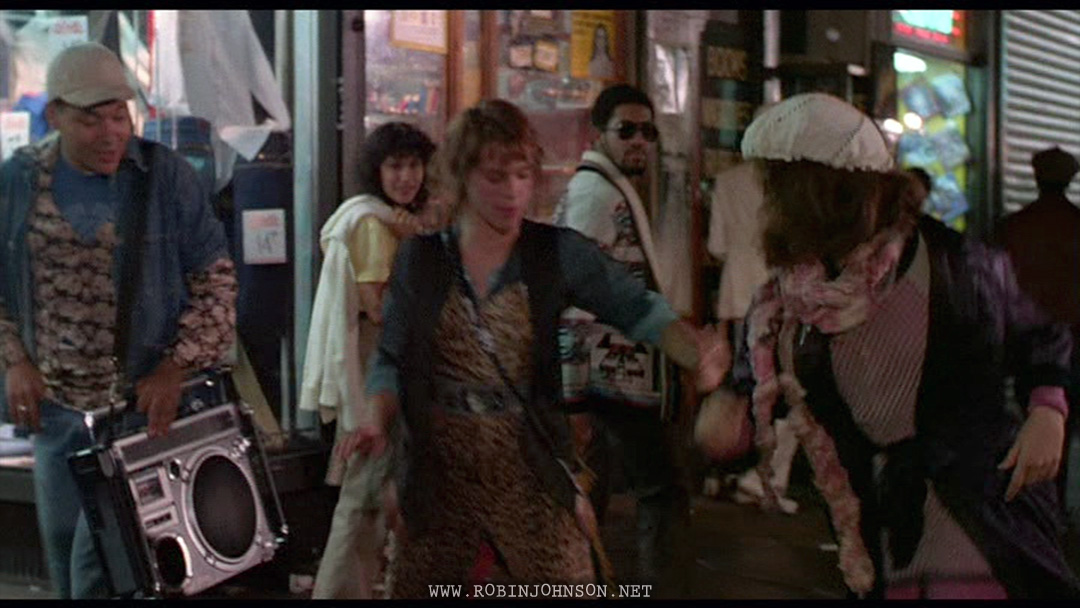
Look again at the photo on page 14, and compare it to the frame capture below. There’s a bit more at the bottom, and lot more at the top, of the photo in the program book. This is the first evidence I’ve seen that Times Square was shot “full-frame;” the entire frame of the 35mm film was exposed with a normal lens, and its widescreen aspect ratio achieved by matting the top and bottom when the prints were made. If it was shot so the extra space was clean of production detritus, a film shot that way could be shown on television using that full frame instead of making a pan-and-scan version and losing the sides of the image. It’s been decades since I’ve seen a television-formatted version of Times Square. Does anyone know if the TV/video print was full frame or pan-and-scan? Because if it was full frame, that would be worthy of preservation in its own right.


Japan : souvenir program : AAT ID: 300253341 : 29.4 x 20.5 cm. : 1981 (work);
Press Book Japan 1981_14_1080px.jpg
Press Book Japan 1981_15_1080px.jpg
Press Book Japan 1981_16_1080px.jpg
Press Book Japan 1981_17_1080px.jpg
Press Book Japan 1981_18_1080px.jpg
Press Book Japan 1981_19_1080px.jpg
96 dpi (images)
©1980 Butterfly Valley N. V.
vlcsnap-2018-01-14-20h03m40s089.jpg
vlcsnap-2018-01-14-19h55m01s851.jpg
vlcsnap-2018-01-14-20h08m42s834.jpg
vlcsnap-2018-01-14-20h06m54s669.jpg
vlcsnap-2018-01-14-20h14m05s134.jpg
608 x 1080px, 96dpi (contrast-adjusted frame captures from Times Square (1980))
One Reply to “<em>Times Square</em> Program Book, Japan, June 1981, pages 14-19 (post 3 of 5)”
Leave a Reply to Vince Cancel reply
Related Posts
Film Review, Vol. 30 No. 10, October 1980
"'I'd sung in a choir when I was 12,' Robin chirps..." Assuming that any periodical dated October probably hit the stands in September, here's a British magazine devoting an entire page to Robin, a month before Times Square's premiere, and four months before it would…
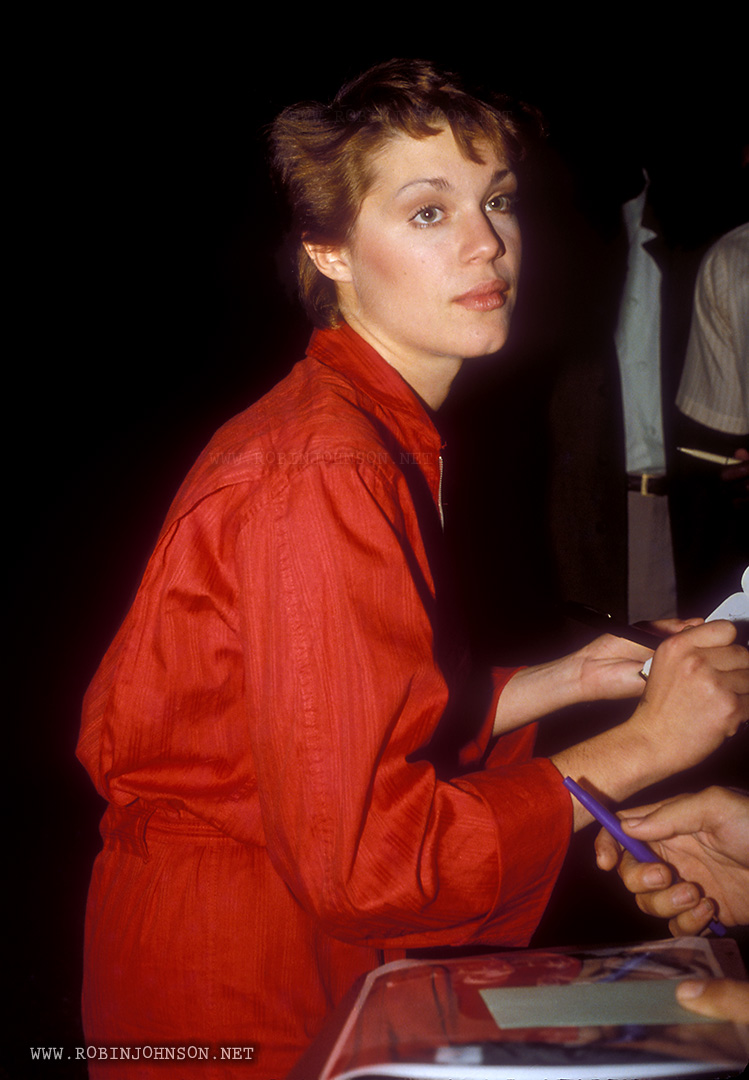
Robin Johnson, signing autographs, late 1980
[caption id="attachment_5163" align="alignleft" width="208"] [/caption] "I’m convinced that if I do this long enough, I’ll have to start laying low in public, to endure the intrusion of strangers asking for autographs. I deeply admire Bette Midler, but I would never dare to ask her for an autograph; I wouldn’t…
Robin steppin’ out in London, January 1981
Robin doesn't remember exactly where this photo was taken, but it was during her publicity tour of the UK for Times Square, and probably in London. She also doesn't think much of it as a photograph, but I think there's something enchanting and 1940s-glamorous about it. It was…
Yeah, the old video release was open-matte full-screen (the original American Thorn-EMI release, at least, I never had the Anchor Bay VHS). If memory serves, I think there were a few times when you could see the booms dipping into frame above the actors, though I may be wrong (it’s been a long time, but I’m thinking there was REALLY noticeable mic dangling above either Tim Curry’s or Anna Maria Horsford’s head in a scene somewhere). No idea where my tape is, but it looks like somebody’s got it on You Tube split into a bunch of parts.